
Introduction
Sensor Fonder is a boutique fund management company in Sweden with just four employees, and has been making waves since its inception in 2009. Focusing on Swedish stocks and bonds through its award-winning Sensor Sverige Select fund, the company manages approximately 5 billion SEK and has been setting the tone for agile sustainable investing with over 14 years of expertise.
Primarily owned by Primrose Partners, Sensor Fonder maintains its dedication and commitment to personalized service. Their investment philosophy and approach is clear and agile, with managers making swift and active decisions, avoiding dilution of performance by limiting the number of holdings in each fund. They have outsourced many department functions that are not fund management-related, allowing their team to strictly focus on fund management and to spend more effort to analyze companies through a sustainability lens.
The foundation of Sensor Fonder's sustainability efforts lies in their internal sustainable analysis conducted before each investment. They evaluate approximately 25 questions about each company's ability to address a specific set of exclusions, assigning internal ESG scores as well as comparing with external benchmarks i.e. Connect Earth. These analyses are updated twice a year, ensuring they remain current and relevant.
The challenge: Low data coverage and time-consuming manual reporting in a rapidly evolving landscape
Prior to Connect Earth, Sensor Fonder faced significant challenges with time-consuming manual reporting and administrative processes, particularly related to the EET template and PAI reporting. Low data coverage further complicated their ability to develop essential information accurately, posing the risk of errors due to manual data handling.
With the regulatory landscape rapidly evolving, including the introduction of the EU Taxonomy and PAI data, Sensor Fonder's requirements shifted. For Philip, the aim was to avoid "black swans," where sustainability-related events could severely impact stock prices, and recognized that companies with a strong focus on sustainability have regulatory and structural advantages, allowing for better market navigation over the long term.
To address these challenges, Sensor Fonder adopted a new data management approach that prioritizes data quality over specific ESG ratings. This transition enabled them to streamline their reporting processes, enhance data coverage, and make more informed investment decisions. Their challenge and ultimate goal was to reduce administrative burdens and shift with a continued focus on increased quality of data coverage, allowing for a greater focus on core investment activities.
The solution: Implementing a platform provider that would streamline reporting processes but stays up-to-date on latest regulatory updates
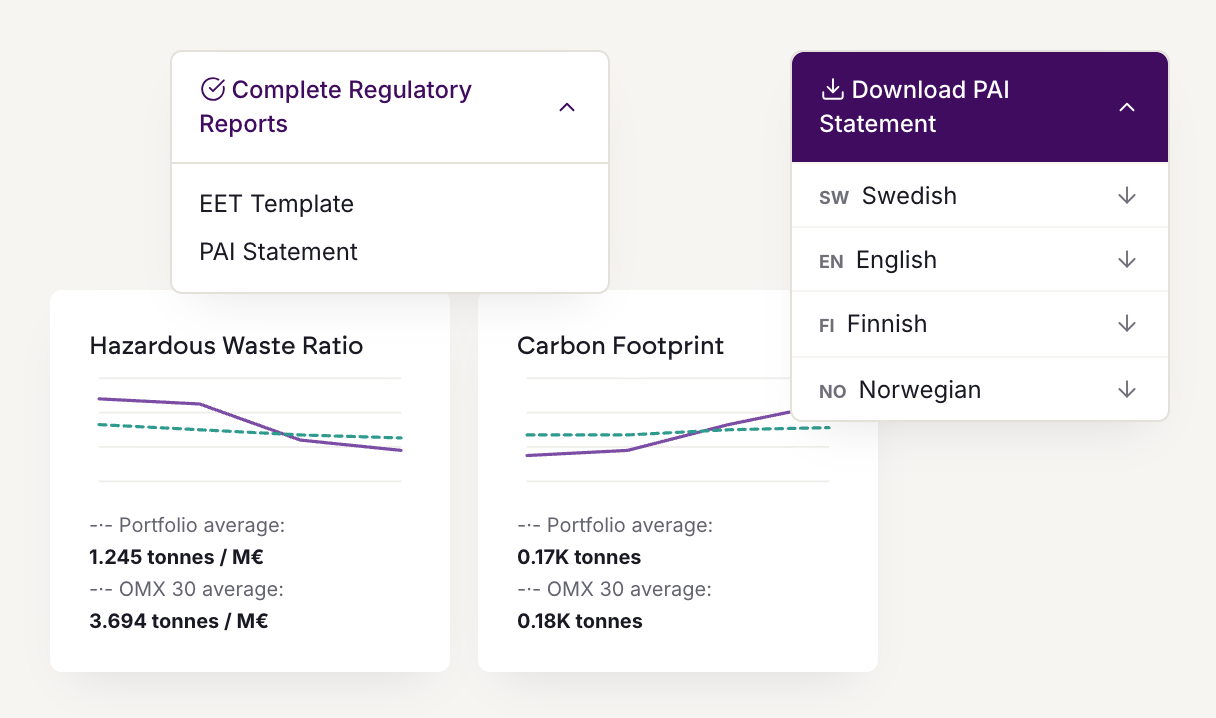
When Sensor Fonder sought to integrate sustainability into its investment strategy and streamline its processes, Connect Earth played a pivotal role. Imagine this, previously, manual work consumed a significant amount of time; for example, filling out EET files with around 616 data points used to take a day or two. With the new EET Version 1.1.2, Connect Earth was able to quickly adapt by updating the module, and now this task takes just 10 minutes. Also, producing PAI statements prior to Connect Earth took a couple of days, but now, with Connect Earth, this process is as simple as pushing a button.
"We spend a lot less time updating, for example, EET files, which is very manual, approximately 616 data points and beforehand took us around a day or two. With Connect Earth, we can update our files in just ten minutes" – Philip Karlberg, CEO at Sensor Fonder
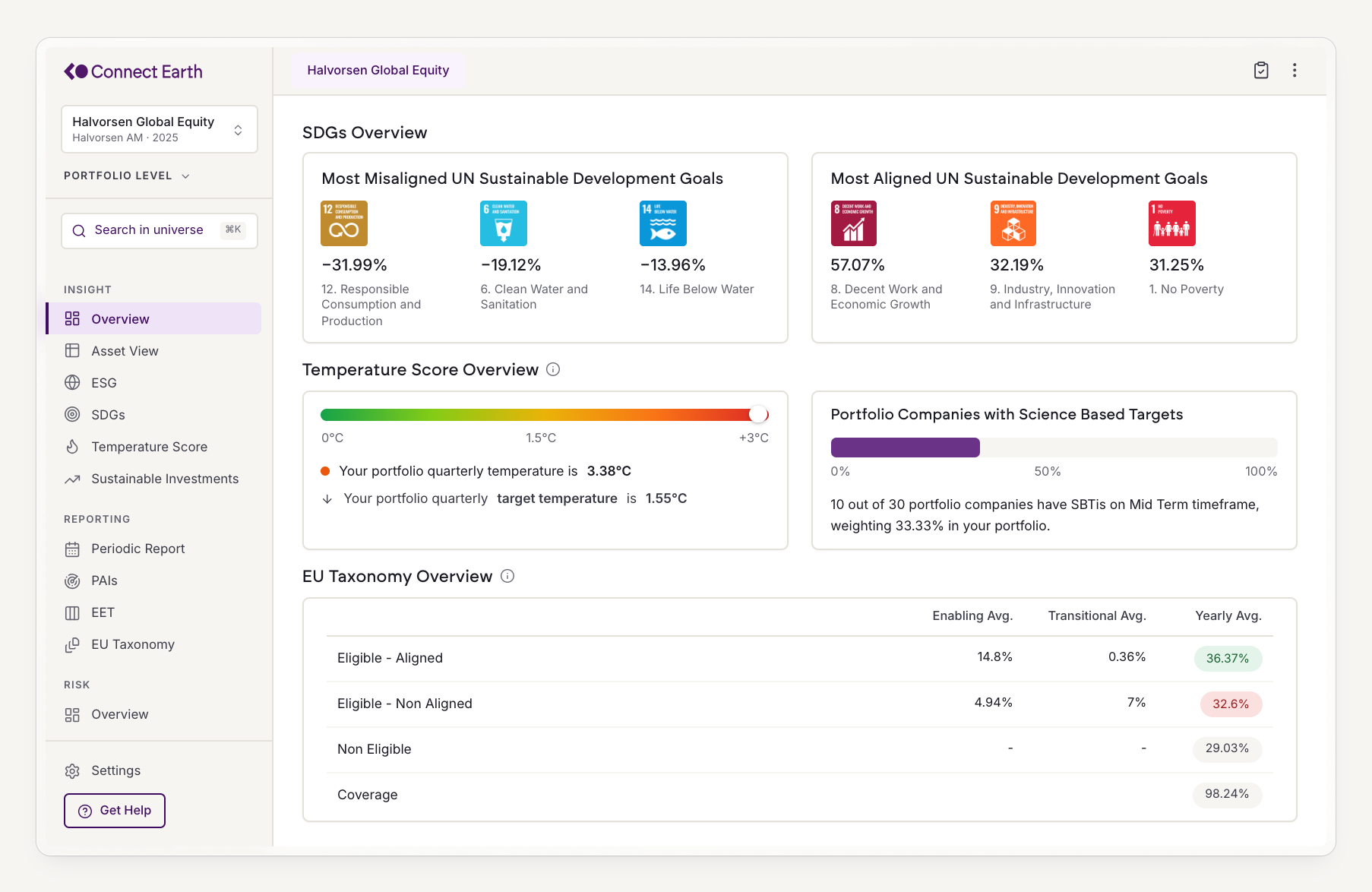
Why is this done so effortlessly and quickly? Connect Earth's extensive data coverage and high transparency have been instrumental in this transformation. Sensor Fonder can now fully utilize data provided by Connect Earth, easily accessing specific data points and understanding their sources which has saved them substantial time and resources.
Moving forward: Agility to industry regulatory changes with an increased focus on high quality data such as EU Taxonomy and Temperature Score
Philip observes that the Swedish fund industry is undergoing rapid changes which means many asset managers must adapt quickly and efficiently. Many fund companies are merging to reduce costs and administrative burdens. Concurrently, there has been a surge in regulatory requirements, particularly concerning sustainability and data regulations. Complying with these new regulations demands significant time and financial resources.
"I think it's necessary for us to have a data provider that could adapt quickly to new regulations that is user-friendly and listens to the needs that we have, but also obtains high data quality" – Philip Karlberg, CEO at Sensor Fonder
Looking ahead, Sensor Fonder expects a continued trend from relying on external ratings to focusing more on classification systems within the fund industry. Since it is hard to measure Sustainable Development Goals (SDGs), especially when it comes to how companies earn their revenue, having more data will likely make classification systems more important. Over time, Philip hopes that regulations within the industry will become clearer and more consistent.