
The moment that sustainability and finance teams across the UK have been preparing for just got significantly closer. On February 25th, 2026, the UK government published its finalised UK Sustainability Reporting Standards: UK SRS S1 and UK SRS S2. Issued by the Department for Business and Trade and built on the IFRS Foundation's global ISSB frameworks, these standards mark a turning point, not just for corporate sustainability teams, but for every financial institution with exposure to UK-listed companies and large private businesses.
This is no longer a horizon-scanning exercise. The infrastructure for decision-useful, investor-grade sustainability disclosure is being built now. The institutions that understand it earliest will be best placed to act on it.
Understanding UK SRS S1 and S2
UK SRS S1 sets the general framework for sustainability-related disclosures, covering how companies should identify, assess, and report the material sustainability risks and opportunities that affect their business model and financial outlook. UK SRS S2 focuses specifically on climate, requiring disclosure across four interconnected pillars: governance, strategy, risk management, and metrics and targets, including greenhouse gas emissions across Scopes 1, 2, and 3. Together, they are designed to give investors and lenders a complete, comparable picture of how a company is managing the transition to a lower-carbon economy. For financial institutions, that picture is the foundation for everything from credit risk assessment to ESG portfolio screening.
What is the ISSB?
The International Sustainability Standards Board (ISSB) is a global standard-setter established by the IFRS Foundation. Its IFRS S1 and S2 standards form the global baseline for sustainability disclosure, adopted or under consideration in more than 20 jurisdictions. UK SRS is a domestic endorsement of these frameworks, adapted to the UK regulatory context, ensuring that UK disclosures remain internationally comparable and investor-ready.
What Changed in the Final Version?
The finalised UK SRS differs from both the global ISSB originals and the UK's own June 2025 exposure drafts in one significant area: transitional reliefs are now open-ended rather than fixed to specific timeframes.
Scope 3 value chain emissions, typically the largest and most complex part of any company's carbon footprint, and the data that sits at the heart of financed emissions measurement, no longer have a time limit on reporting relief. Companies voluntarily adopting UK SRS S2 can defer Scope 3 disclosure indefinitely, provided they disclose they are using the relief. A parallel change was made to the "climate-first" relief under UK SRS S1. In both cases, the timeline question passes to whichever regulator or legislation mandates use of the standard in future.
For businesses considering voluntary adoption, this offers real flexibility, but not a blank cheque. Growing investor and lender demand for Scope 3 data means that deferring indefinitely carries its own commercial and reputational risk, regardless of what the standard permits. For the financial institutions on the other side of that relationship, the quality of counterparty emissions data is becoming a competitive differentiator.
What does “comply or explain” mean in practice?
Under a comply or explain regime, companies must either report in full accordance with the standard, or publicly explain why they have not done so. It is not a free pass. Investors and regulators scrutinise explanations closely, and persistent non-compliance without a credible rationale can damage stakeholder trust and invite regulatory scrutiny.
To find out more information on the UK Sustainability Reporting Standards, visit Gov.uk.
The Road to Mandatory Reporting
Adoption is currently voluntary, but mandatory requirements are already taking shape. The FCA is actively consulting on requiring UK-listed companies to include UK SRS-based disclosures in their annual reports. Its proposals include a one-year transition period for Scope 3 and a two-year transition for UK SRS S1, both moving to a “comply or explain” basis thereafter. For private companies, the government has confirmed it will consider extending UK SRS requirements as part of an upcoming consultation on modernising UK corporate reporting. Large private businesses should not assume they are exempt.
What This Means for Your Business
Whether you are an asset manager building out your PAI reporting, a retail bank with ESG lending ambitions, or a compliance team navigating SFDR obligations, UK SRS raises the floor on the emissions data you need from your counterparties.
The Scope 3 deferral flexibility is notable, but the direction of travel is not. Financed emissions disclosure is becoming the baseline expectation. The institutions building a reliable, structured data foundation today will be the ones making confident decisions when mandatory timelines arrive, rather than scrambling to catch up.
A practical starting point: map your current counterparty and portfolio data against the new disclosure framework. Identify where your emissions data falls short, particularly on Scope 3, and start building the cross-functional ownership between risk, compliance, and sustainability teams that audit-ready reporting will require. The compliance burden is real. But so is the commercial opportunity for institutions that treat transparent, structured ESG data as infrastructure rather than obligation.
Prepare for UK SRS with Connect Earth
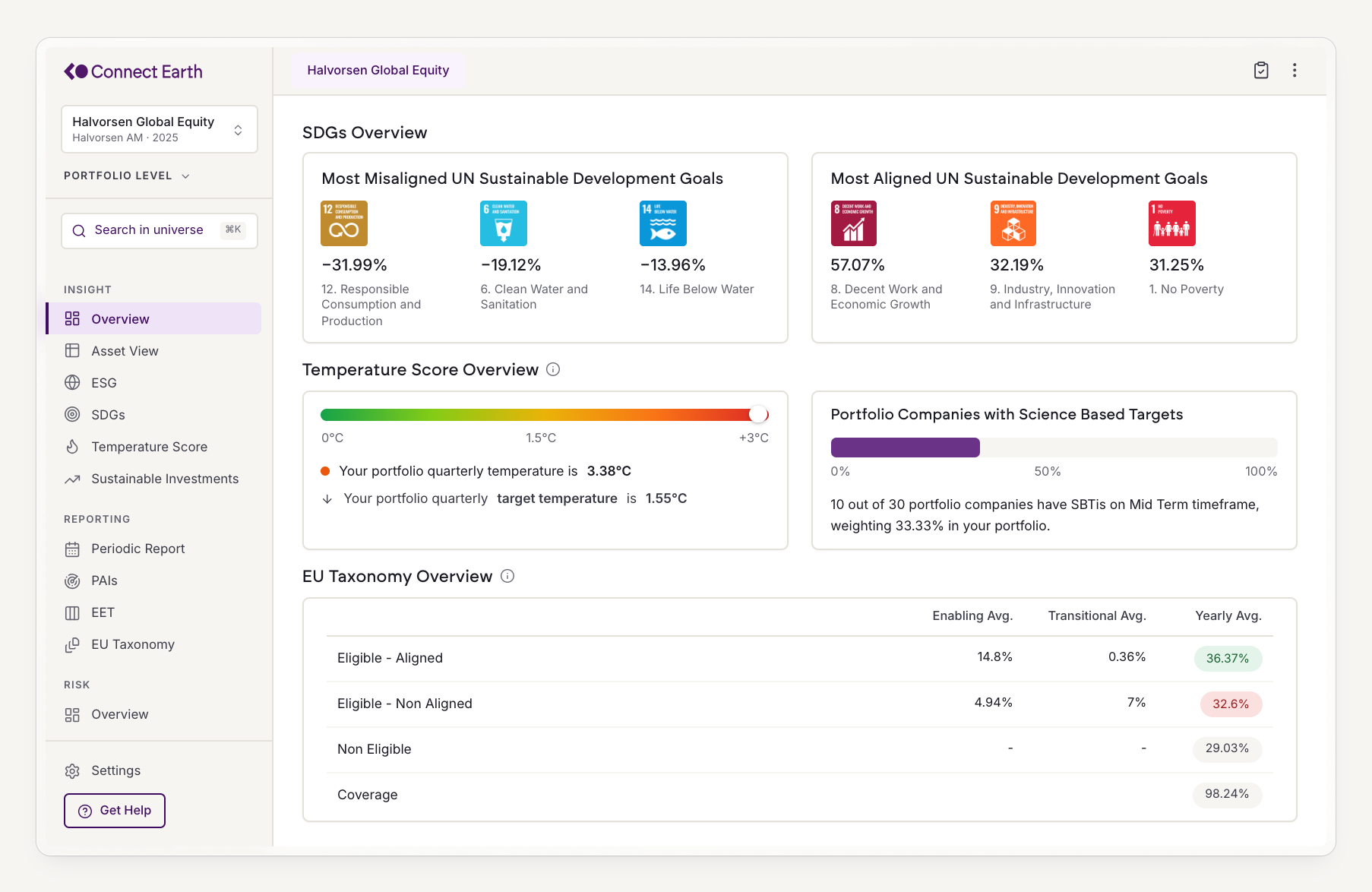
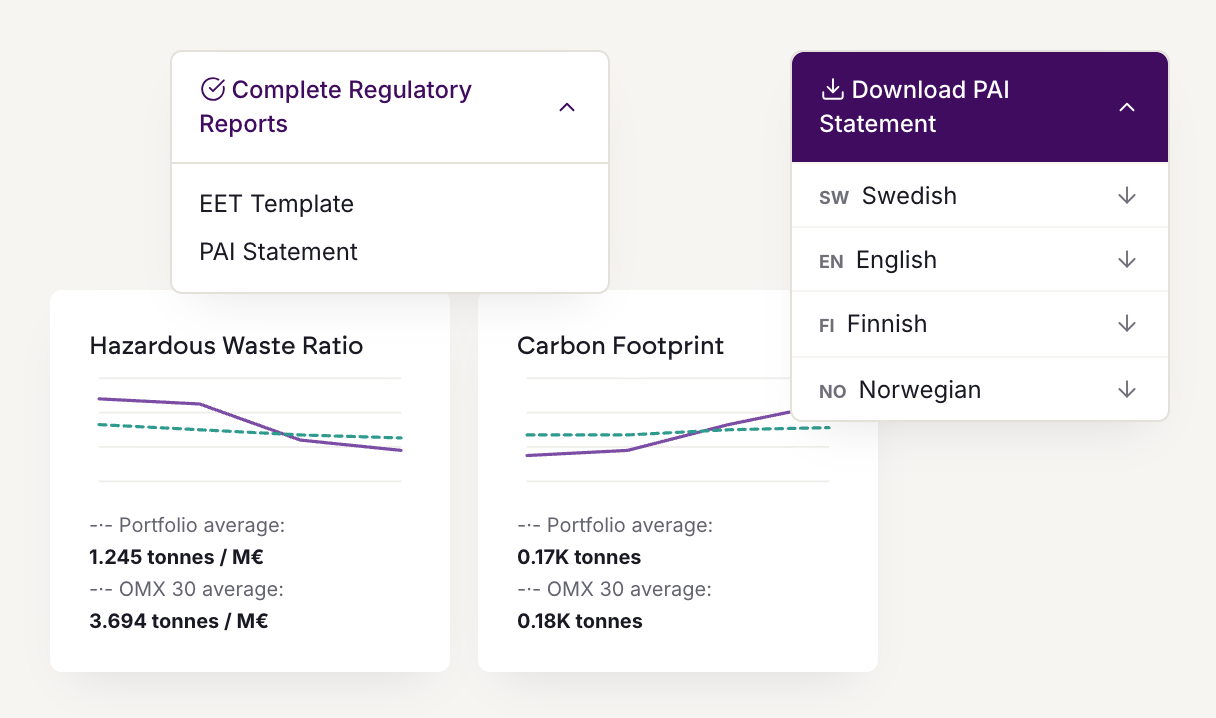
Connect Earth's Compliance and Reporting module is built to help financial institutions measure, structure, and act on the sustainability data that standards like UK SRS S1 and S2 demand, from financed emissions to portfolio-level ESG screening.
See how financial institutions use Connect Earth to measure, report, and act on sustainability data.
Your sustainability strategy deserves clarity and clear action, and we’re here to help you get there.
Book a meeting.