Know the moment something changes in your portfolio
Ask an asset manager what they want from their ESG tools and you tend to hear the same thing back: tell me when something changes, and tell me what it means. It came up in our pipeline more than any other request, so we built it. Real-time controversy monitoring, a dedicated Risk dashboard and configurable exclusion screening are now live in Connect Earth.
Here's what's new, why it works the way it does, and what makes now the right moment.
The way most controversies get caught today
Picture a typical Monday for a sustainability lead at a small asset manager. A company in the portfolio had a bad weekend: a spill, a lawsuit, a regulator knocking. The news broke on Saturday. By the time anyone on the team sees it, reads around it, and works out whether it actually matters for the fund, it's Wednesday. The portfolio manager finds out from the analyst, who found out from a Google search.
That lag is expensive. Bank of America analysed 24 major ESG controversies at S&P 500 companies, covering everything from emissions scandals to data breaches, and found they wiped $534 billion off the value of the firms involved over five years. Their head of US equity strategy put it plainly: the hit to market value is significant and long-lasting, and it can take a year for a stock to reach its trough after a controversy. Knowing on Saturday instead of Wednesday gives you time to act while everyone else is still working out what happened.
The other problem is the shape of the information itself. Plenty of tools will send you an alert. Most of them hand you a severity flag and a colour, and leave the actual work to you: what happened, how bad is it really, does it touch our holding, what do we tell the PM. A flag you can't act on just adds to the pile.
What we built
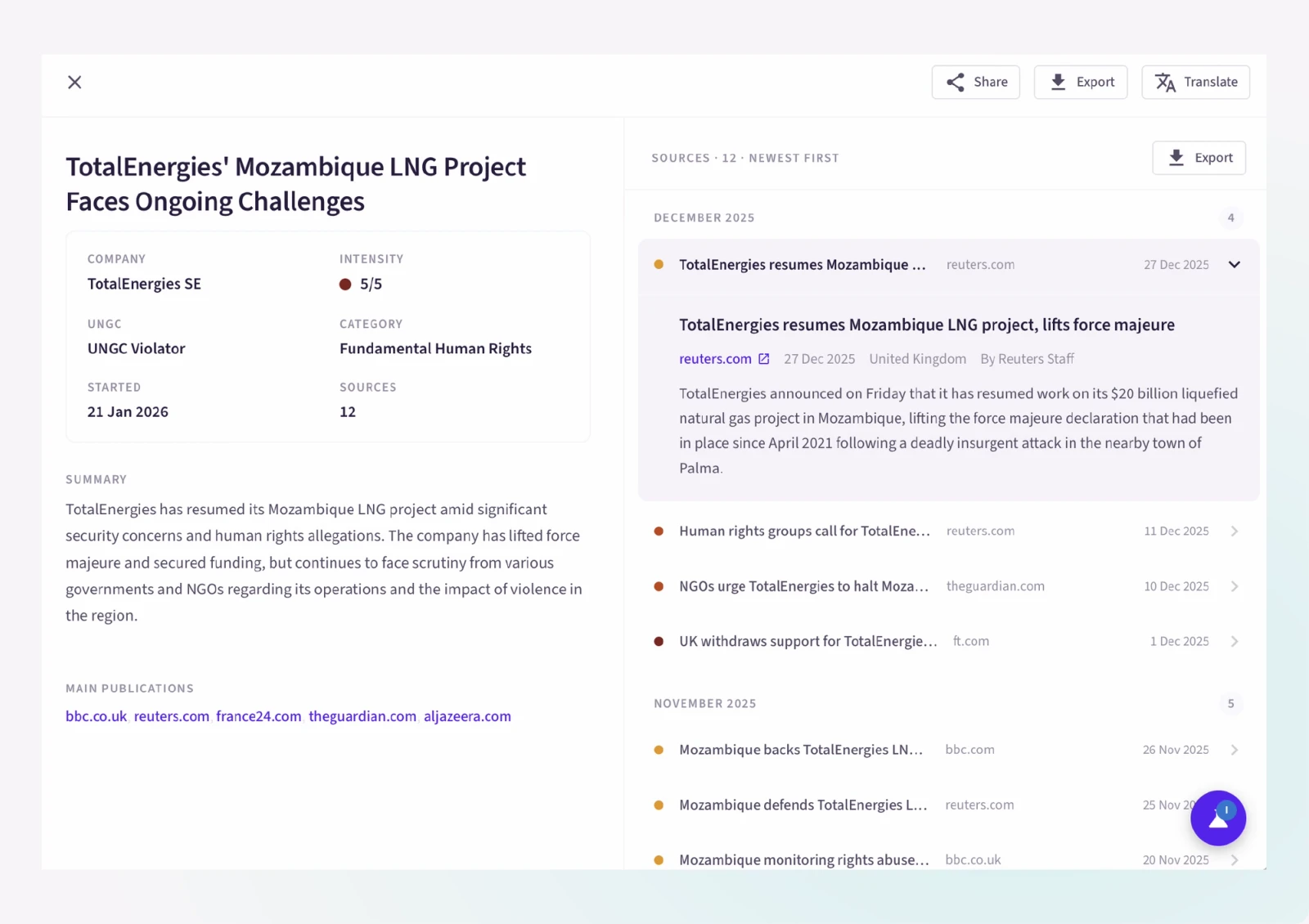
Real-time controversy monitoring. When an ESG incident happens at a company you hold, you get an alert as it surfaces, not on a weekly digest. Each alert comes with a plain-language memo: what happened, why it matters for that company, and where the information came from, traced back to source. You can read it in a minute and hand it to a portfolio manager or an investor without rewriting a word.
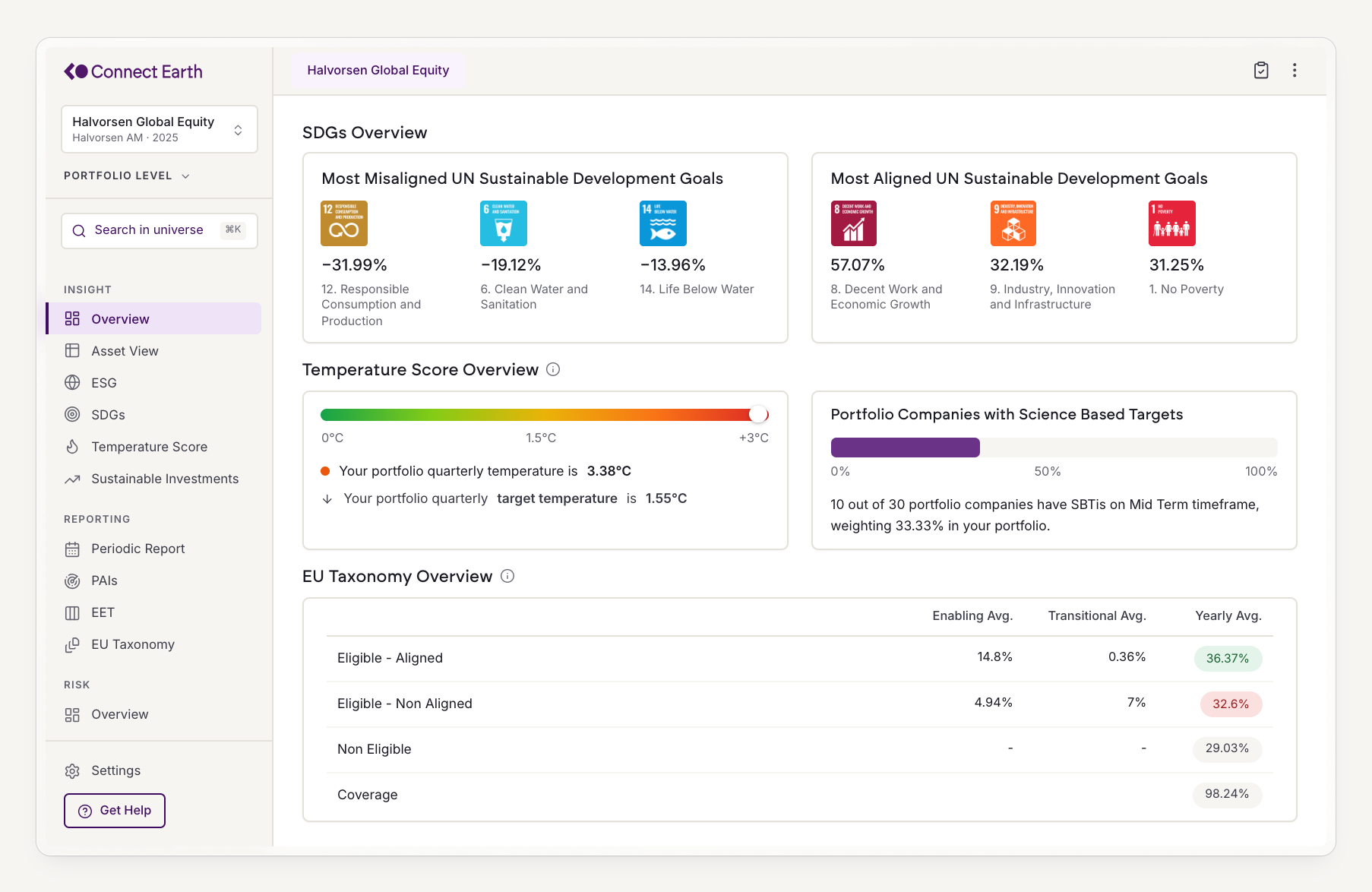
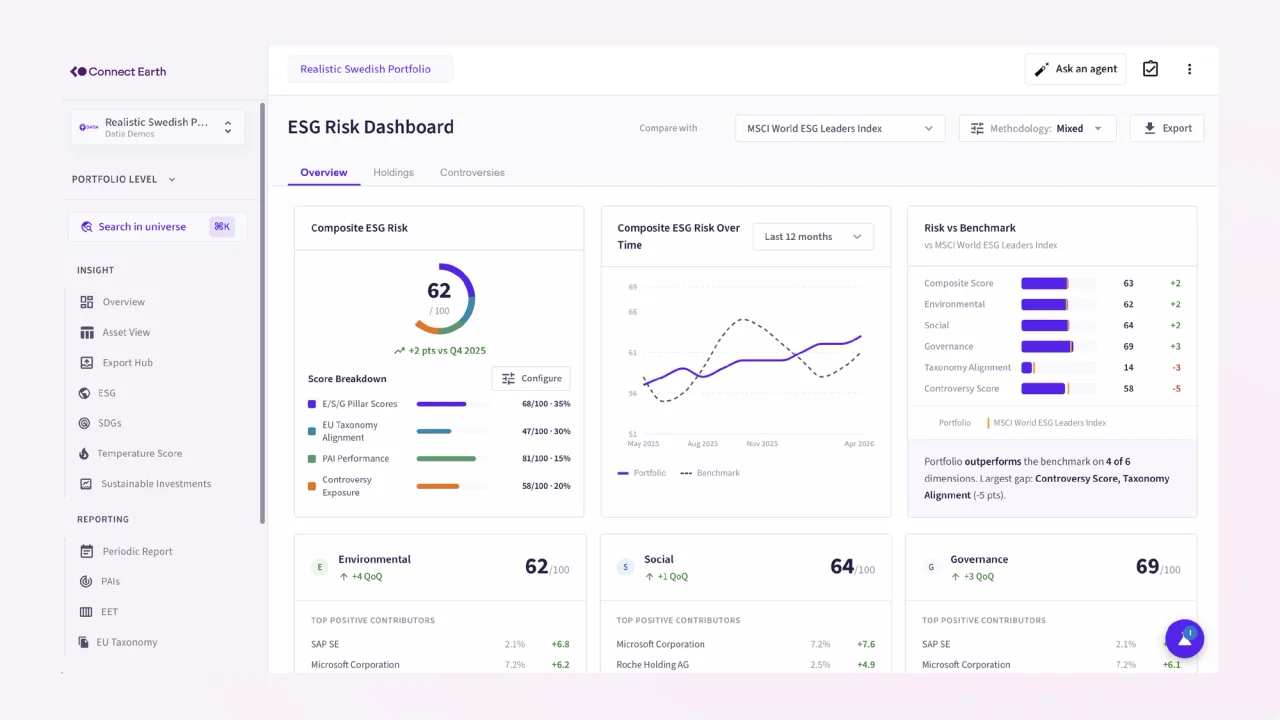
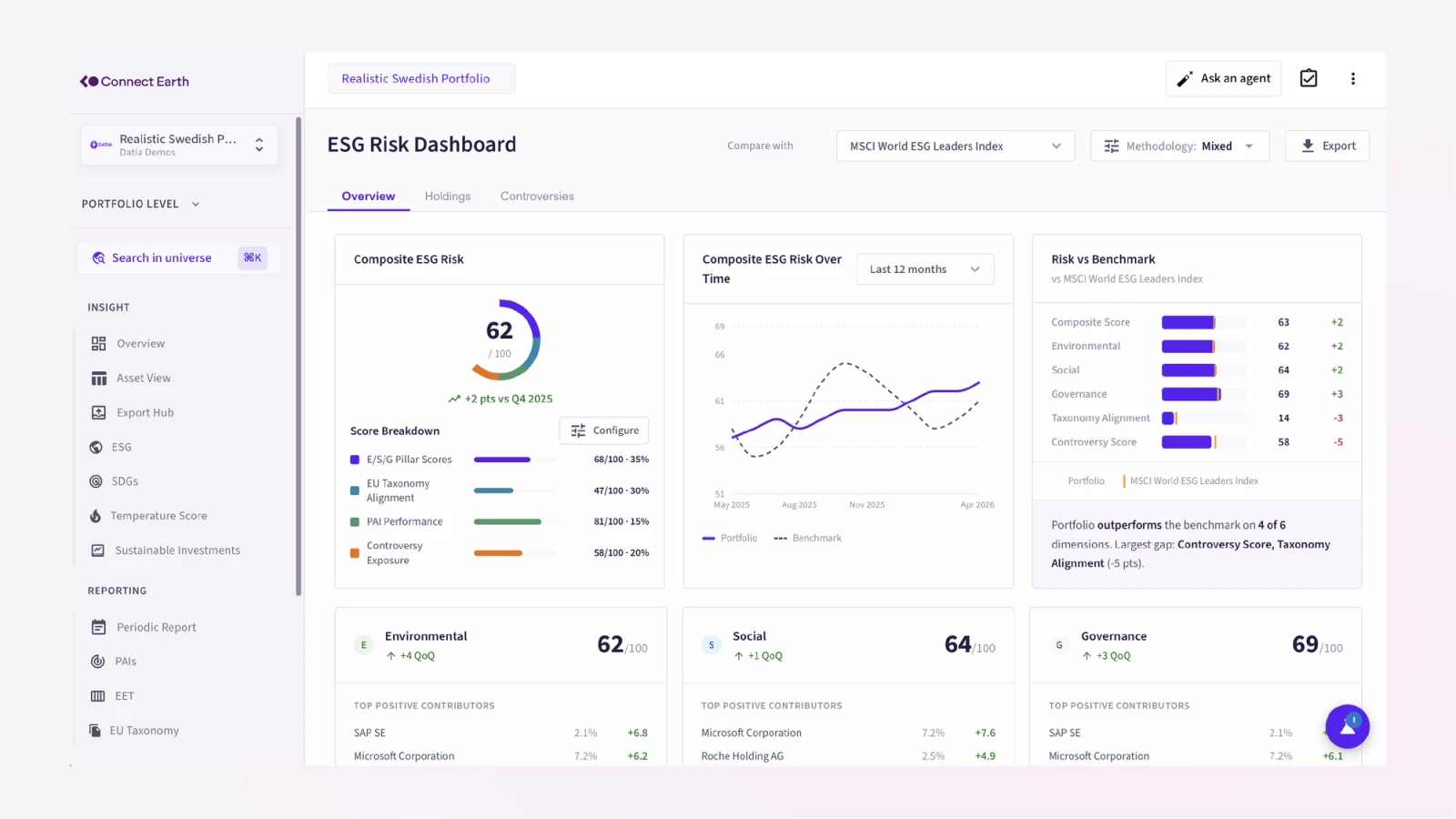
The Risk dashboard. One screen for every ESG risk signal across your portfolio. Instead of clicking through five modules to assemble a picture, you see it in one configurable view, with risk weightings you set to match your own investment policy. It turns Connect Earth from a place you go to pull data into a place you go to understand where you stand.
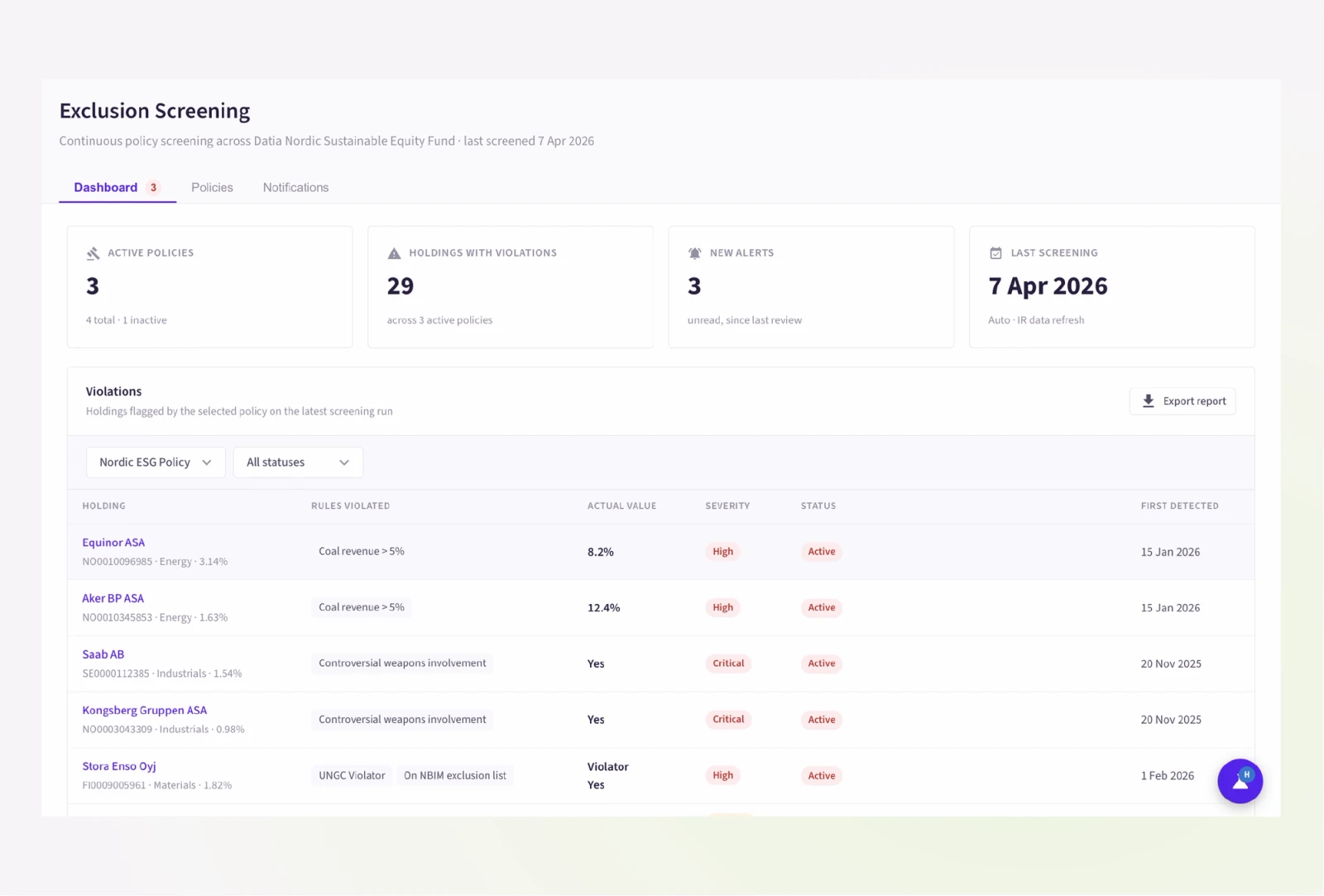
Exclusion screening. For most compliance teams, the exclusion policy lives in a spreadsheet, and checking it means cross-referencing every holding against every rule by hand. Now you define your policy once, in the platform, in the same language you wrote it in: exclude if coal revenue is above 5%, exclude on severe UN Global Compact violations, exclude anything on the Norges Bank exclusion list. Connect Earth screens every portfolio against every rule continuously, re-screens automatically whenever the underlying data updates, and flags new violations with the evidence behind them: which holding, which rule, and the actual data value. New holdings are screened the moment they land, and every screening run is logged, so your audit trail builds itself.
Together they do something straightforward: they move you from research to action. The thing you used to spend a morning on, you now glance at over coffee.
Why a memo beats a flag
The alert is the easy part. Real-time detection is becoming common. What's still rare, especially for teams that aren't running a 30-person ESG desk, is getting the context handed to you in language you can use straight away. Every controversy memo answers the three questions a flag leaves open: what is this, why does it matter for this holding, and where did the data come from so you can stand behind it.
Exclusion screening works the same way. A violation never arrives as a bare red icon. It arrives with the rule it broke, the number that broke it, and a link to the underlying data, ready to go into a compliance file or a client answer.
Why now
Supervisors increasingly care about the data and the process behind a disclosure, not just whether it was filed. ESMA's guidelines on the supervision of sustainability information apply to disclosures published from the start of 2025, and they expect firms to be able to show their sources and assumptions. The cost of getting it wrong is no longer theoretical either. In April 2025, Frankfurt prosecutors fined DWS €25 million to settle a three-year greenwashing investigation, pointing to marketing that presented the firm as a sustainability leader while the underlying processes lagged behind the claims.
And the direction of travel is clear. The European Commission's proposed overhaul of SFDR, published in November 2025, replaces today's disclosure articles with three product categories: Sustainable, Transition and ESG Basics. Every one of them carries a baseline of mandatory exclusions covering coal, controversial weapons, tobacco and severe breaches of international norms, with the new rules expected to apply from around 2028. A documented, continuously screened exclusion policy is about to be the entry ticket to every label on the shelf.
That's the gap these three features close together. When every alert carries its provenance and every screening run is logged, you already have your defence, rather than assembling it after the fact.
Built on what you asked for
None of this came from a whiteboard. Our customers told us what they needed, in their words. One asked us simply why a score was low and found the old answer wasn't good enough. Another said they needed alerts, traceability and controversy context, not just flags. A third had built their entire exclusion screening workflow from scratch in Excel. A fourth was checking business involvements by hand every single day, because nothing was watching for them. We built towards those sentences.
That's the part we're proudest of. When your client base is focused rather than enormous, the feature requests don't disappear into a queue behind ten thousand other firms. They become the roadmap.
See it
If you manage ESG risk or exclusion policies for an asset manager and any of this sounds like your Monday, book a walkthrough at connect.earth/book-a-demo. It takes about 20 minutes and there are no slides, just the product watching a real portfolio.